
Fishing Villages
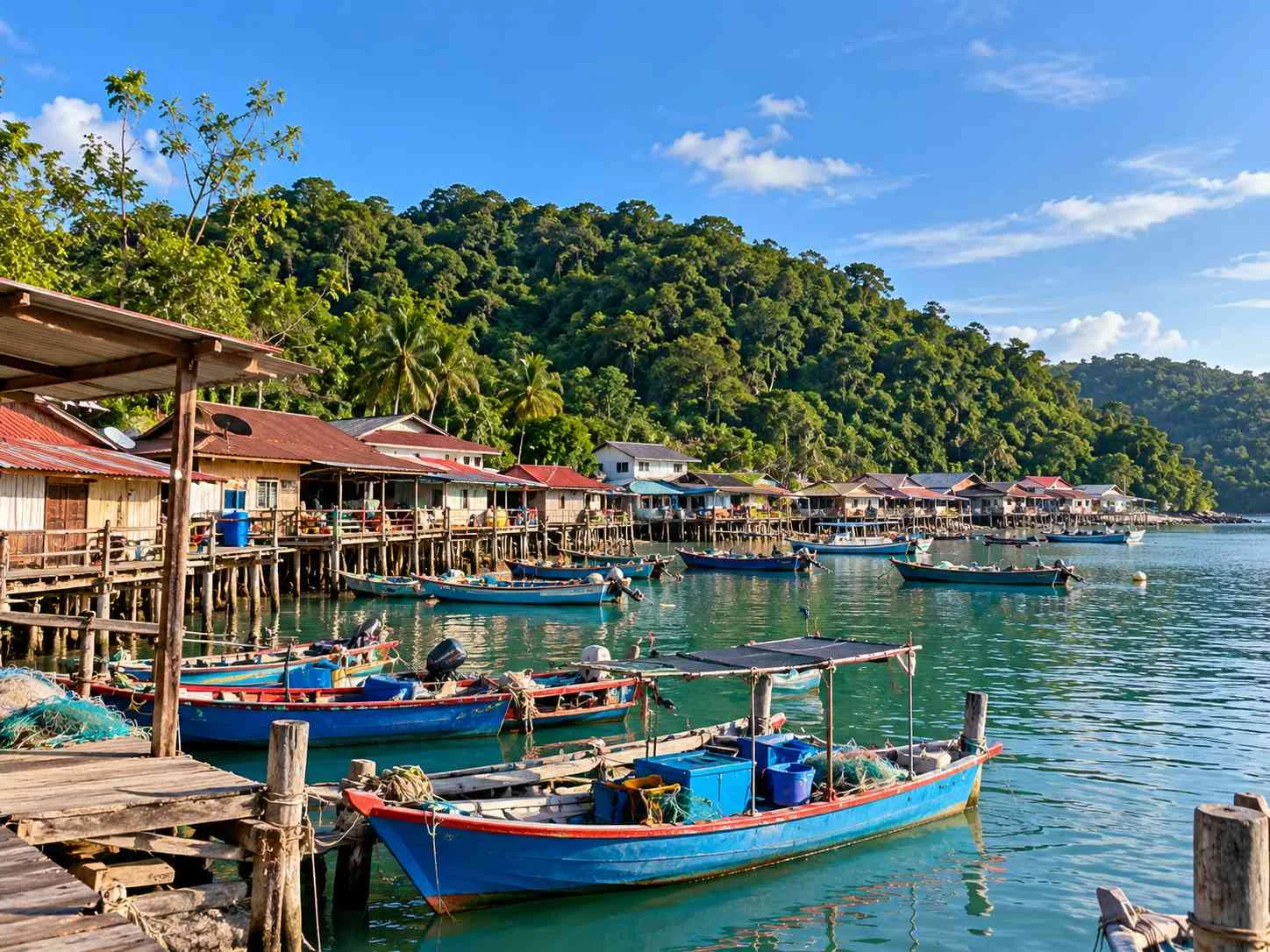
Pangkor Island’s fishing villages offer a glimpse into the working communities that have shaped the island for generations. Explore the eastern coast around Sungai Pinang Kecil to see fishing boats, jetties, traditional boatbuilding and everyday island life connected with Pangkor’s fishing and seafood heritage.
About Fishing Villages
Community
Pangkor Island's fishing villages offer visitors a chance to experience a side of the island that is very different from its beaches, resorts and tourist attractions. Along Pangkor's eastern coastline, traditional fishing communities continue to live and work around the sea, with fishing boats, jetties, seafood businesses and village neighbourhoods forming an important part of everyday island life.
Areas around Sungai Pinang Kecil and the eastern side of Pangkor are particularly associated with the island's fishing heritage. Visitors travelling through these communities may see fishing vessels returning to shore, nets and equipment being prepared, seafood being sorted or processed, and businesses connected with one of Pangkor's longest-established industries.
Unlike a purpose-built tourist attraction, the fishing villages are real working and residential communities. The best way to experience them is respectfully: observe daily life, support local businesses and remember that jetties, workshops, homes and fishing facilities are primarily working spaces.
For travellers interested in culture and everyday island life, the fishing communities add an important dimension to a wider journey through the places to visit in Pangkor Island.
Why Are Fishing Villages Important to Pangkor Island?
Fishing has played an important role in Pangkor Island's economy and identity for generations.
The island's coastal location and surrounding marine resources supported communities that depended on fishing, seafood trading, processing and related industries long before Pangkor became widely known as a holiday destination.
Tourism Perak describes fishing as one of the island's major traditional occupations, with fishing communities historically involved in products such as fish, squid, shrimp, anchovies and other seafood.
These traditions remain visible today, making the fishing villages an important part of Pangkor's living heritage rather than simply a reminder of the past.
Where Are Pangkor's Fishing Villages?
Pangkor Island's fishing communities are concentrated mainly along the eastern side of the island.
This coastline faces the mainland and contains settlements, jetties, fishing activity and seafood businesses that are closely connected with the island's maritime economy.
Sungai Pinang Kecil is one of the most useful areas for visitors who want to experience this side of Pangkor. Sungai Pinang Besar and other nearby eastern-coast communities also form part of the wider local landscape.
Depending on your ferry route and visibility, some parts of Pangkor's fishing settlements and fishing activity may also be visible while approaching the island from the mainland.
What Can You See in a Pangkor Fishing Village?
A visit to Pangkor's fishing communities is less about one specific monument and more about observing how the island's maritime traditions continue as part of everyday life.
Depending on the location, time of day and current fishing activity, visitors may notice:
- Fishing boats: Working vessels used by local fishing communities around Pangkor and the surrounding waters.
- Village jetties: Small coastal access points used for boats, fishing activities and local transport.
- Nets and fishing equipment: Equipment may be prepared, repaired or stored around working areas.
- Seafood handling: Fish and other seafood may be unloaded, sorted or prepared after boats return.
- Dried seafood products: Pangkor has a long association with dried fish, squid, shrimp and anchovy products.
- Traditional boatbuilding: Parts of Pangkor's eastern coast have retained knowledge of constructing wooden fishing boats by hand.
- Local homes and businesses: The villages are living communities rather than reconstructed heritage displays.
What you see will depend on the working schedule of fishermen and businesses. Fishing activity changes with weather, sea conditions, season and the time of day.
Sungai Pinang Kecil and Pangkor's Fishing Heritage
Sungai Pinang Kecil is closely associated with Pangkor Island's maritime and fishing traditions.
The surrounding area contains fishing-related businesses, jetties and local communities that provide a useful glimpse into how fishing has influenced the development of the eastern side of the island.
Unlike Pangkor's western coast, which is better known for visitor beaches such as Pasir Bogak and Teluk Nipah, the eastern side provides a stronger connection with working communities, boats and seafood-related industries.
This contrast is one of the reasons exploring different sides of Pangkor Island can be worthwhile.
Traditional Fishing Boats and Boatbuilding
One of the more unusual traditions associated with Pangkor's fishing communities is traditional wooden boatbuilding.
Tourism Perak has documented traditional boatbuilding activity around the eastern side of Pangkor, particularly in the area towards Sungai Pinang Kecil.
These fishing vessels have traditionally been built using knowledge passed between experienced boatbuilders rather than relying entirely on modern computer-generated designs.
The process requires considerable skill in shaping timber, building the hull and producing a vessel capable of handling local fishing conditions.
If you encounter a boatbuilding workshop during your visit, remember that it is normally a working industrial space rather than a formal visitor attraction. Observe only from appropriate public areas unless the owner or workers clearly allow closer access.
Fishing Boats and Life Around the Jetties
Jetties are an important part of daily life in Pangkor's fishing communities.
Fishing boats may leave early, return with their catch, unload equipment or prepare for the next trip depending on the fishing schedule.
The appearance of a working jetty can therefore vary significantly throughout the day.
Visitors should avoid blocking access routes, standing in areas where fish or equipment are being unloaded, or interfering with workers trying to complete their normal activities.
Watching responsibly from an appropriate distance is usually a better experience than trying to turn every working area into a photography location.
Pangkor's Connection with Ikan Bilis
Pangkor Island is particularly well known for ikan bilis, or anchovies.
Anchovy fishing and processing form an important part of the island's wider fishing economy, and Pangkor products are distributed beyond the island to markets elsewhere in Malaysia.
According to Department of Fisheries figures reported in 2025, Pangkor Island recorded more than 2,800 tonnes of anchovy landings during 2024, making it the largest contributor to Perak's anchovy landings for that year.
The industry includes more than catching fish. Anchovies and other seafood must be handled, processed, dried, sorted and packed before being distributed or sold.
For visitors, this helps explain why seafood processing businesses are an important part of the landscape around Pangkor's fishing communities.
Dried Seafood and Local Products
Pangkor's fishing heritage can also be experienced through its local seafood products.
Traditional and commercial products associated with the island include:
- Ikan bilis or dried anchovies
- Dried fish
- Dried squid and cuttlefish
- Seafood snacks
- Fish-based products
- Prawn and seafood crackers
Some seafood businesses and processing facilities may sell packaged products directly to visitors.
Availability, production schedules and visitor access vary between individual businesses, so do not assume that every processing site is open to tourists.
Seafood Processing on Pangkor Island
Seafood processing forms the link between Pangkor's fishing boats and the products eventually sold to consumers.
Depending on the type of seafood, processing can involve sorting, boiling, drying, seasoning, packing and storage.
Tourism Perak has highlighted Pangkor's traditional dried-seafood industry as one of the island's distinctive local trades, giving visitors an opportunity to understand how seafood moves from sea to finished product.
Visitors interested specifically in this industry should treat processing facilities as working businesses and follow any visitor instructions provided by the operator.
A Living Community, Not an Open-Air Museum
One of the most important things to understand when visiting Pangkor's fishing villages is that these are real communities where people live and work.
Homes, boats, workshops, jetties and processing areas should not automatically be treated as public tourist spaces.
A respectful visit means observing local life without intruding on residents or disrupting business activities.
This approach also creates a more authentic travel experience because visitors are seeing everyday Pangkor rather than a staged version created specifically for tourists.
How to Visit Pangkor's Fishing Villages Respectfully
- Use public roads and public access areas unless invited into a private property or workplace.
- Do not enter homes, workshops, jetties or processing areas without permission.
- Ask before photographing local residents or workers at close range.
- Avoid blocking boats, vehicles, jetties or unloading areas.
- Keep children away from working machinery and fishing equipment.
- Do not touch nets, catches, boats or equipment without permission.
- Support local shops, food businesses and producers when appropriate.
- Keep the village, shoreline and jetty areas clean.
- Do not treat residents as displays or photo props.
Photography in Pangkor's Fishing Villages
Pangkor's fishing communities can provide interesting opportunities for travel photography, including boats, jetties, village streets and coastal scenery.
However, there is an important difference between photographing a landscape and photographing someone's everyday life.
For wide public scenes, boats and coastal views, photography is generally less intrusive. When photographing individual fishermen, residents, workers or private homes, ask permission whenever practical.
Visitors should also avoid standing in dangerous working areas simply to obtain a better photograph.
When Is a Good Time to Visit?
Fishing villages change character throughout the day because they follow working rather than tourism schedules.
Fishing boats may arrive or depart at different times depending on weather, tides, sea conditions and the type of fishing activity.
There is therefore no single guaranteed time when visitors will see every aspect of the fishing industry in operation.
Daytime visits are generally easier for exploring public roads and observing village surroundings, while anyone interested in a particular factory, workshop or activity should confirm access directly with the relevant operator.
Is the Fishing Village Suitable for Families?
Pangkor's fishing communities can be educational for families because children can see a working side of island life that is very different from resorts and recreational beaches.
However, parents should remember that jetties, boats, machinery and working areas are not designed as children's attractions.
Children should remain supervised, particularly around the waterfront and any active industrial or fishing areas.
Fishing Villages and Pangkor's Multicultural Community
Pangkor Island's eastern communities also reflect the multicultural character of the island.
Fishing, seafood processing, temples, mosques, local businesses and residential neighbourhoods exist close to one another, creating a cultural landscape quite different from Pangkor's resort areas.
Exploring this side of the island can help visitors understand that Pangkor is not simply a holiday destination. It is also home to communities whose livelihoods remain closely connected with the sea.
Why Visit Pangkor's Fishing Villages?
The fishing villages are particularly worthwhile for travellers interested in:
- Local Pangkor culture
- Traditional fishing communities
- Everyday island life
- Fishing boats and maritime heritage
- Traditional boatbuilding
- Seafood and anchovy production
- Travel photography
- Community-based tourism
- Local food and seafood products
The experience is less structured than visiting a temple, fort or beach. That is precisely what makes it valuable for visitors who want to see more of the real Pangkor Island.
Getting to Pangkor's Fishing Villages
The main fishing communities are situated along the eastern side of Pangkor Island, including the wider Sungai Pinang Kecil area.
Visitors can travel through these communities by road after arriving on the island.
If you do not have your own transportation, a Pangkor taxi can be used for a point-to-point journey or a wider trip through the eastern side of Pangkor.
Travellers who want to combine local communities with beaches, religious landmarks and historical attractions can also consider a Pangkor Island sightseeing tour.
Combine the Fishing Villages with Other Pangkor Attractions
A visit to the fishing communities works well as part of a wider cultural sightseeing route.
The eastern side of Pangkor contains temples, mosques, working communities and other local landmarks, while historical sites and beaches can be reached by continuing around the island.
Explore our complete guide to places to visit in Pangkor Island for more ideas when planning your route.
If you prefer arranged transportation between several stops, see the available Pangkor Island tour options. For individual journeys, use a Pangkor taxi.
Planning Your Pangkor Island Visit
If exploring Pangkor's fishing communities is part of a larger holiday, planning your ferry journey and local transportation in advance can make sightseeing easier.
Our Pangkor ferry and travel information explains the main journey to the island, while the Pangkor travel guide provides useful information about transportation, accommodation, food, beaches, cultural attractions and other things to do.
Frequently Asked Questions About Pangkor Fishing Villages
Does Pangkor Island have fishing villages?
Yes. Fishing villages and fishing-related communities are an important part of Pangkor Island, particularly along the eastern side of the island.
Where are the fishing villages in Pangkor?
Pangkor's fishing communities are concentrated mainly along the eastern coastline. Sungai Pinang Kecil is one of the areas particularly associated with fishing, seafood businesses and traditional maritime activity.
Is Sungai Pinang Kecil a fishing village?
Sungai Pinang Kecil is one of Pangkor's eastern coastal communities and is closely connected with fishing, seafood processing, jetties and traditional boatbuilding activity.
What can I see in a Pangkor fishing village?
Depending on current working activity, visitors may see fishing boats, jetties, nets, fishing equipment, seafood handling, local businesses and parts of Pangkor's traditional maritime economy.
Is Pangkor famous for ikan bilis?
Yes. Pangkor Island is strongly associated with anchovy fishing and processing. Department of Fisheries figures reported for 2024 showed Pangkor as the largest contributor to Perak's anchovy landings during that year.
Can tourists visit seafood factories in Pangkor?
Some seafood-related businesses have historically welcomed visitors or sold packaged products directly, but each facility operates independently. Always check current visitor arrangements rather than entering a working factory without permission.
Can I see traditional boatbuilding in Pangkor?
Traditional fishing-boat construction has been documented around Pangkor's eastern fishing communities, particularly towards the Sungai Pinang Kecil area. Workshops are working premises, so access depends on the owner and current activity.
Are Pangkor's fishing villages tourist attractions?
They are better understood as working residential communities that visitors can experience respectfully rather than purpose-built tourist attractions.
Can I take photographs in the fishing villages?
Photography of public scenery, boats and coastal views may be appropriate, but visitors should ask permission before taking close photographs of residents, workers or private property.
How can I get to the fishing villages?
The eastern fishing communities can be reached by road from other parts of Pangkor Island. Visitors can use local taxi transportation or include the area within a wider island sightseeing route.
Is visiting a fishing village worth it?
For travellers interested in Pangkor's local culture, traditional livelihoods, seafood industry and everyday community life, the fishing villages provide an experience that is very different from visiting the island's beaches and resorts.
Experience the Working Side of Pangkor Island
Pangkor's fishing villages show visitors that the island's identity has always been closely connected with the sea.
Fishing boats, village jetties, traditional boatbuilding, seafood processing and generations of maritime knowledge continue to form part of life along the eastern coast.
Visiting these communities respectfully offers an opportunity to understand Pangkor not only as a holiday island, but as a living place where fishing continues to support families, businesses and local traditions.
Continue exploring our guide to Pangkor Island attractions and places to visit to discover more communities, temples, mosques, heritage sites and beaches around the island.
Location
Area: Sungai Pinang Kecil / Eastern Pangkor
Fishing Village Area, Kampung Sungai Pinang Kecil, 32300 Pulau Pangkor, Perak, Malaysia
More places to visit in Pangkor
Combine Fishing Villages with other beaches, heritage sites and local spots around the island.
Need help planning your Pangkor trip?
Tell us where you are staying, your travel date, number of guests and what you need. We will help you with the most relevant Pangkor taxi, island tour, transfer or local service enquiry.