
Fish & Anchovy Industry
Pangkor Island is an important centre for anchovies and traditional seafood products, especially ikan bilis mata biru, dried fish, squid and fish satay. Around Sungai Pinang Kecil, visitors can discover how the island’s fishing catch is processed, dried and packed while supporting local seafood producers.
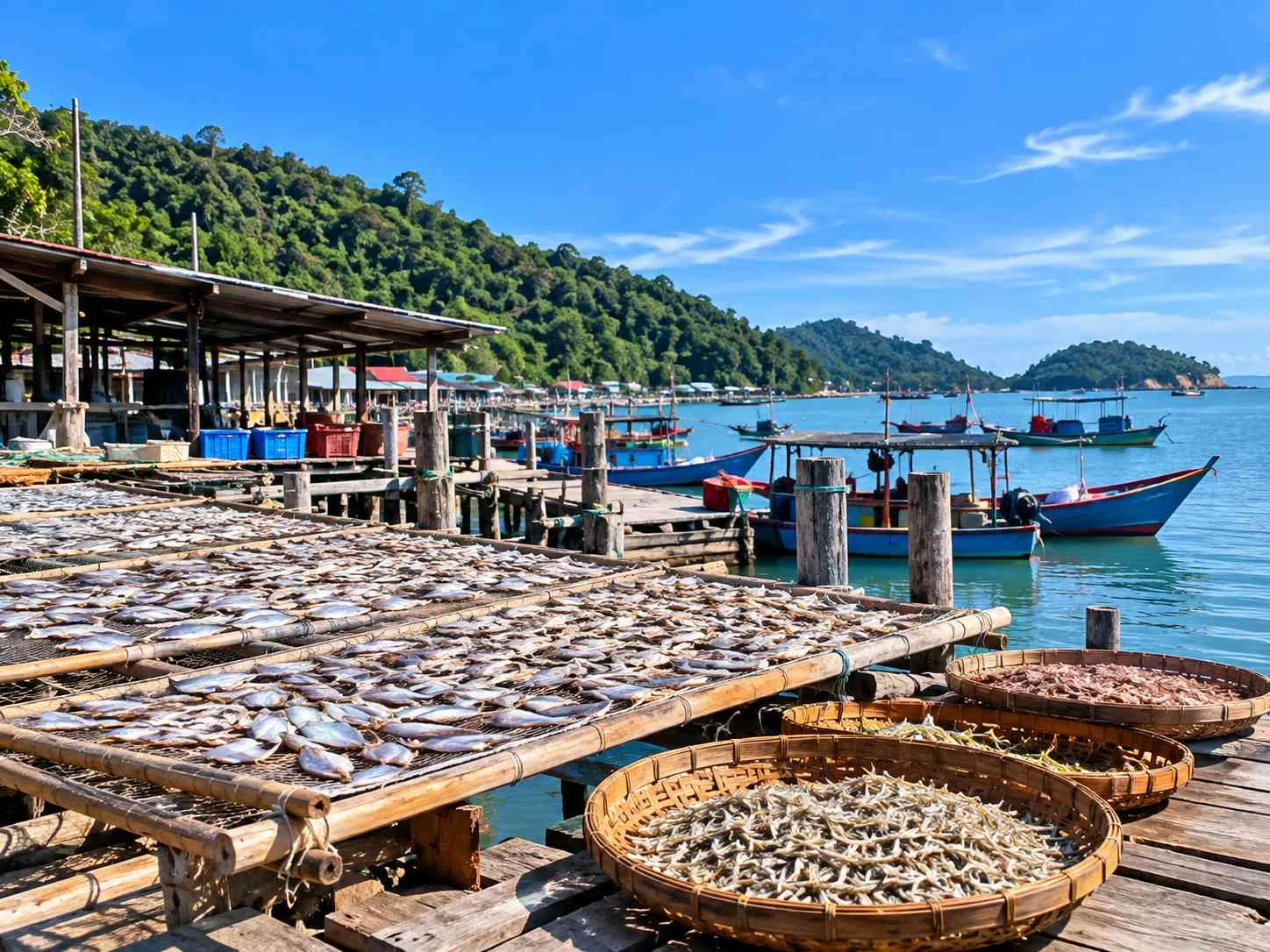
About Fish & Anchovy Industry
Industry
Pangkor Island's fish and anchovy industry is an important part of the island's economy, food culture and maritime identity. While many visitors know Pangkor for its beaches and resorts, the island is also strongly associated with ikan bilis, dried seafood, fish satay and other products that begin with the fishing communities along Pangkor's eastern coastline.
One of the best-known products is ikan bilis mata biru, often described in English as blue-eyed anchovies. These small fish are landed, processed, dried, sorted and packed before being sold locally or distributed to markets beyond the island.
The wider seafood industry also includes dried fish, squid, cuttlefish, prawns, seafood crackers, fish satay and other processed products. Around Sungai Pinang Kecil, visitors can still see how fishing, seafood processing and local businesses remain closely connected.
For travellers who want to understand Pangkor beyond its beaches, the seafood industry provides another valuable perspective on the island's working economy and local traditions. It can be explored as part of a wider journey through the places to visit in Pangkor Island.
Why Is Pangkor Famous for Ikan Bilis?
Pangkor Island has a long connection with fishing because of its coastal location and access to productive marine waters.
Among the different seafood landed around the island, anchovies have become particularly closely associated with Pangkor. Local ikan bilis is sold for household cooking, restaurant use and commercial distribution, while packaged anchovies are also popular with visitors looking for local food products to bring home.
In Malaysia, ikan bilis is an everyday ingredient used in many dishes. It may be fried until crisp, added to sambal, used to flavour soups and vegetables, or served with favourites such as nasi lemak.
This strong domestic demand helps explain why anchovy fishing and processing continue to be economically important to Pangkor.
How Important Is Pangkor's Anchovy Industry?
Recent fisheries statistics demonstrate the scale of the industry.
According to Department of Fisheries Malaysia figures reported for 2024, Pangkor Island recorded 2,844.44 tonnes of anchovy landings valued at RM42.67 million.
This made Pangkor the largest contributor to Perak's anchovy landings for that year and confirmed the island's continuing importance within Malaysia's fisheries industry.
The figures are useful because they show that Pangkor's connection with ikan bilis is not simply a tourism slogan. Anchovy fishing remains part of a substantial working industry involving fishing vessels, fishermen, processors, traders and related businesses.
What Are Ikan Bilis Mata Biru?
Visitors shopping for seafood products around Pangkor may frequently see the term ikan bilis mata biru, literally referring to "blue-eyed anchovies".
This name is widely associated with anchovies sold from Pangkor and the surrounding Perak coastal region.
Different grades and sizes of ikan bilis may be available depending on the catch, processing method and seller. Appearance, size, saltiness and price can therefore vary between products.
Rather than assuming that every packet labelled ikan bilis is identical, visitors buying anchovies can ask the seller about the grade, size and recommended use.
How Are Pangkor Anchovies Processed?
The journey from fishing boat to packaged ikan bilis involves several stages.
The exact process can vary between fishermen and processors, but it commonly involves:
- Fishing and landing: Anchovies are caught around suitable fishing grounds and brought into the local fisheries supply chain.
- Initial handling: The catch is handled quickly to maintain quality.
- Boiling: Anchovies may be briefly boiled as part of the traditional processing method.
- Drying: The fish are spread out and dried until the required moisture level is achieved.
- Sorting: Dried anchovies are separated according to quality, size or product grade.
- Cleaning and preparation: Depending on the product, further cleaning or preparation may take place.
- Packing: Finished products are packaged for retail, wholesale or distribution.
Weather can influence traditional drying because sunlight, humidity and rainfall affect how quickly seafood dries.
Modern processors may also use additional equipment or controlled methods depending on the scale and requirements of their operation.
Traditional Drying of Anchovies
Drying is one of the most recognisable stages of traditional anchovy processing.
After initial preparation, anchovies can be spread across dedicated drying surfaces where heat and airflow remove moisture from the fish.
This process helps preserve the product and produces the familiar dried ikan bilis used in Malaysian cooking.
Visitors may occasionally see seafood drying around authorised processing facilities, but these are working production areas. Do not enter drying areas or touch products without permission from the operator.
Pangkor's Blue-Eyed Anchovies
Pangkor's blue-eyed anchovies have attracted attention because they are closely identified with the island's seafood industry.
A recent report on the local industry described fishermen processing these anchovies around Pangkor and documented the basic process of briefly boiling the catch before drying it on dedicated platforms.
The drying process requires time and suitable weather conditions, reinforcing the connection between the finished product and the coastal environment in which it is produced.
For visitors, understanding this process makes a packet of Pangkor ikan bilis more meaningful than simply treating it as another souvenir.
More Than Anchovies: Pangkor's Dried Seafood Products
Although ikan bilis is one of the island's most recognisable products, Pangkor's seafood-processing industry includes much more than anchovies.
Products associated with Pangkor may include:
- Ikan bilis and dried anchovies
- Dried fish
- Fish satay
- Dried squid and cuttlefish
- Barbecued fish products
- Seafood crackers
- Prawn-based snacks
- Salted seafood
- Other packaged marine products
The exact products available vary between manufacturers, retailers and the time of year.
What Is Pangkor Fish Satay?
Fish satay is one of the processed seafood snacks strongly associated with Pangkor Island.
Despite the name, it should not necessarily be confused with grilled meat satay served on skewers. Pangkor fish satay generally refers to seasoned, processed fish products prepared as a snack.
Tourism Malaysia highlights fish satay as one of the popular seafood snacks visitors can sample around Pangkor's seafood-processing businesses.
Factories and local shops may sell different variations of fish satay together with squid, dried fish, crackers and other seafood snacks.
Seafood Processing Around Sungai Pinang Kecil
Sungai Pinang Kecil on Pangkor's eastern side is one of the areas particularly associated with seafood processing and the island's fishing economy.
The neighbourhood is connected with fishing villages, boats, jetties, traditional boatbuilding and businesses involved in processing and selling marine products.
This concentration makes the area useful for visitors who want to understand how the different parts of Pangkor's seafood economy connect with one another.
Fishing brings the catch ashore, processing transforms it into products with a longer shelf life, and local businesses package and distribute those products to customers.
Visiting a Seafood Processing Business
Some Pangkor seafood businesses have historically welcomed visitors and sold products directly from their premises.
Tourism Perak has specifically highlighted seafood-processing businesses around Sungai Pinang Kecil where visitors may observe parts of the traditional processing trade and purchase packaged seafood.
However, every business operates independently. Visitor access, production schedules, opening hours and available products can change.
If you want to visit a specific factory, check current arrangements before travelling rather than assuming that production areas are always open to the public.
What Can Visitors Learn?
A responsible visit to a seafood-processing area can help travellers understand the journey from fishing to finished product.
Depending on the business and current production activity, visitors may learn about:
- How anchovies are landed and handled
- Traditional boiling and drying methods
- Sorting and grading ikan bilis
- Packaging seafood for sale
- Fish satay and seafood snack production
- The connection between fishermen and processors
- The importance of weather to traditional drying
- How local seafood products are distributed beyond Pangkor
Buying Ikan Bilis in Pangkor
Ikan bilis is one of the most practical food products visitors can bring home from Pangkor.
When comparing products, look beyond price alone. Different packets may contain different sizes, grades and processing styles.
Before buying, you may want to ask:
- What size or grade of anchovy is this?
- Is the product cleaned or uncleaned?
- How should it be stored?
- What is the expiry or best-before date?
- Is the packaging sealed for travel?
- What dishes is this grade best suited for?
If you are flying or travelling internationally, also check your destination's food-import rules before packing dried seafood.
How to Store Dried Seafood
Dried seafood should be stored according to the instructions provided by the manufacturer or retailer.
Packaging, moisture content and processing method can differ, so one storage rule should not automatically be applied to every product.
Keep packages properly sealed, avoid unnecessary exposure to heat and humidity, and follow any refrigeration or freezing instructions provided on the label.
Supporting Pangkor's Local Seafood Businesses
Buying directly from established Pangkor producers and retailers can help support businesses connected with the island's fisheries economy.
This can include processors, seafood shops and other local businesses that transform the fishing catch into products sold to consumers.
Responsible tourism does not require visitors to enter working areas or interrupt production. Simply purchasing local products from legitimate businesses can provide economic support while allowing normal work to continue.
Fish Industry vs Fishing Villages: What Is the Difference?
The two experiences are closely related but focus on different parts of Pangkor Island's maritime story.
Pangkor's fishing villages are primarily about the communities, fishermen, boats, jetties and everyday life connected with fishing.
The fish and anchovy industry focuses more on what happens to the catch after and around landing: processing, boiling, drying, sorting, packing, distribution and the creation of products such as ikan bilis and fish satay.
Experiencing both gives visitors a more complete understanding of how Pangkor's fishing economy works.
Why the Industry Matters to Pangkor Island
Pangkor's seafood industry is important for several reasons.
- It provides income connected with fishing and seafood processing.
- It supports businesses involved in packaging, trading and retail.
- It preserves traditional knowledge related to seafood processing.
- It produces food products strongly associated with Pangkor.
- It connects the island with markets elsewhere in Malaysia.
- It gives visitors another way to experience Pangkor's local economy and culture.
Recent anchovy landing statistics show that this remains an economically significant industry rather than only a historical tradition.
Responsible Visits to Working Seafood Areas
Processing facilities are workplaces where food hygiene and worker safety are important.
- Do not enter production areas without permission.
- Follow all hygiene instructions provided by the operator.
- Do not touch seafood or processing equipment without permission.
- Keep children supervised around machinery and working areas.
- Avoid blocking workers, delivery vehicles or loading areas.
- Ask before photographing individual workers.
- Respect any areas marked as private or restricted.
- Purchase products only from legitimate businesses.
Where Is Pangkor's Fish and Anchovy Industry?
Seafood processing is associated particularly with the eastern side of Pangkor Island, including the wider Sungai Pinang Kecil area.
This part of the island is closely connected with fishing villages, jetties, seafood businesses and other maritime activities.
There is no single attraction representing the entire industry. Visitors should think of it as a collection of working businesses and communities rather than one museum or purpose-built visitor centre.
If you do not have your own transportation, a Pangkor taxi can be used to reach Sungai Pinang Kecil and nearby eastern-coast areas.
Travellers who want to combine local industry with other cultural, historical and coastal attractions can also consider a Pangkor Island sightseeing tour.
Combine the Seafood Industry with Other Pangkor Attractions
The eastern side of Pangkor provides several experiences that can be combined within the same sightseeing route.
Visitors can explore local communities and seafood businesses before continuing to religious landmarks, heritage sites, beaches and other parts of the island.
See our complete guide to places to visit in Pangkor Island for ideas when planning your route.
If you prefer transportation between several locations to be arranged together, explore the available Pangkor Island tour options. For individual journeys, use a Pangkor taxi.
Planning Your Pangkor Island Trip
If exploring Pangkor's seafood industry is part of your holiday, planning your ferry journey and island transportation in advance can make visiting easier.
Our Pangkor ferry and travel information explains the main journey to the island, while the Pangkor travel guide provides useful information about transportation, accommodation, food, beaches, cultural attractions and other things to do.
Frequently Asked Questions About Pangkor's Fish and Anchovy Industry
Is Pangkor Island famous for ikan bilis?
Yes. Pangkor is strongly associated with anchovy fishing and processing. Department of Fisheries figures for 2024 showed that Pangkor was the largest contributor to Perak's anchovy landings that year.
What is ikan bilis mata biru?
Ikan bilis mata biru is a name commonly used for blue-eyed anchovies associated with Pangkor and the surrounding Perak coastal region. Different grades and sizes may be sold by seafood processors and retailers.
How much ikan bilis is landed in Pangkor?
Department of Fisheries statistics reported for 2024 recorded 2,844.44 tonnes of anchovy landings from Pangkor Island, valued at RM42.67 million. Production varies from year to year, so these figures should be understood as 2024 statistics rather than a permanent annual amount.
Where can I learn about seafood processing in Pangkor?
Sungai Pinang Kecil and the eastern side of Pangkor Island are closely associated with fishing and seafood-processing businesses. Some operators have historically welcomed visitors, but current access should always be confirmed directly.
What seafood products is Pangkor known for?
Products associated with Pangkor include ikan bilis, dried fish, fish satay, squid and cuttlefish products, seafood crackers and other packaged marine snacks.
What is Pangkor fish satay?
Fish satay is a processed seafood snack associated with Pangkor. Different manufacturers produce their own variations using fish, seasoning and drying or cooking processes.
Can tourists visit an anchovy factory in Pangkor?
Some seafood-processing businesses have historically allowed visitors to observe parts of their operations and purchase products. However, each factory has its own current visitor policy and production schedule, so access should be confirmed before visiting.
Can I buy ikan bilis directly in Pangkor?
Yes. Seafood retailers and processing businesses around Pangkor sell packaged anchovies and other seafood products. Product varieties, grades, prices and availability vary by seller.
Is the fish industry the same as Pangkor's fishing villages?
They are closely connected but not identical. Fishing villages focus on the communities and fishing activities, while the seafood industry also includes processing, drying, sorting, packaging, trading and retail.
Is Sungai Pinang Kecil important to Pangkor's seafood industry?
Yes. The area is closely associated with Pangkor's fishing communities and contains businesses involved in dried seafood, fish satay and related industries.
How do I get to the seafood-processing area?
Sungai Pinang Kecil can be reached by road from other parts of Pangkor Island. Visitors can use local taxi transportation or include the area within a wider sightseeing route.
Discover the Industry Behind Pangkor's Famous Seafood
Pangkor's reputation for seafood begins long before a packet of ikan bilis reaches a shop shelf.
Behind the finished product is a network of fishermen, boats, processors, drying operations, packers, traders and local businesses that continue to connect Pangkor Island with the sea.
Understanding this process gives visitors another way to appreciate Pangkor's identity and shows why anchovies and dried seafood remain such an important part of the island's economy and food culture.
Continue exploring our guide to Pangkor Island attractions and places to visit to discover more local communities, cultural landmarks, heritage sites and beaches around the island.
Location
Area: Sungai Pinang Kecil / Eastern Pangkor
Seafood Processing Area, Sungai Pinang Kecil, 32300 Pulau Pangkor, Perak, Malaysia
More places to visit in Pangkor
Combine Fish & Anchovy Industry with other beaches, heritage sites and local spots around the island.
Need help planning your Pangkor trip?
Tell us where you are staying, your travel date, number of guests and what you need. We will help you with the most relevant Pangkor taxi, island tour, transfer or local service enquiry.