
Dutch Fort / Kota Belanda
Dutch Fort, locally known as Kota Belanda, is a 17th-century heritage site in Teluk Gedung, Pangkor Island. Originally established by the Dutch in 1670 during the Perak tin trade, its restored brick ruins offer a fascinating glimpse into Pangkor's colonial and trading history.
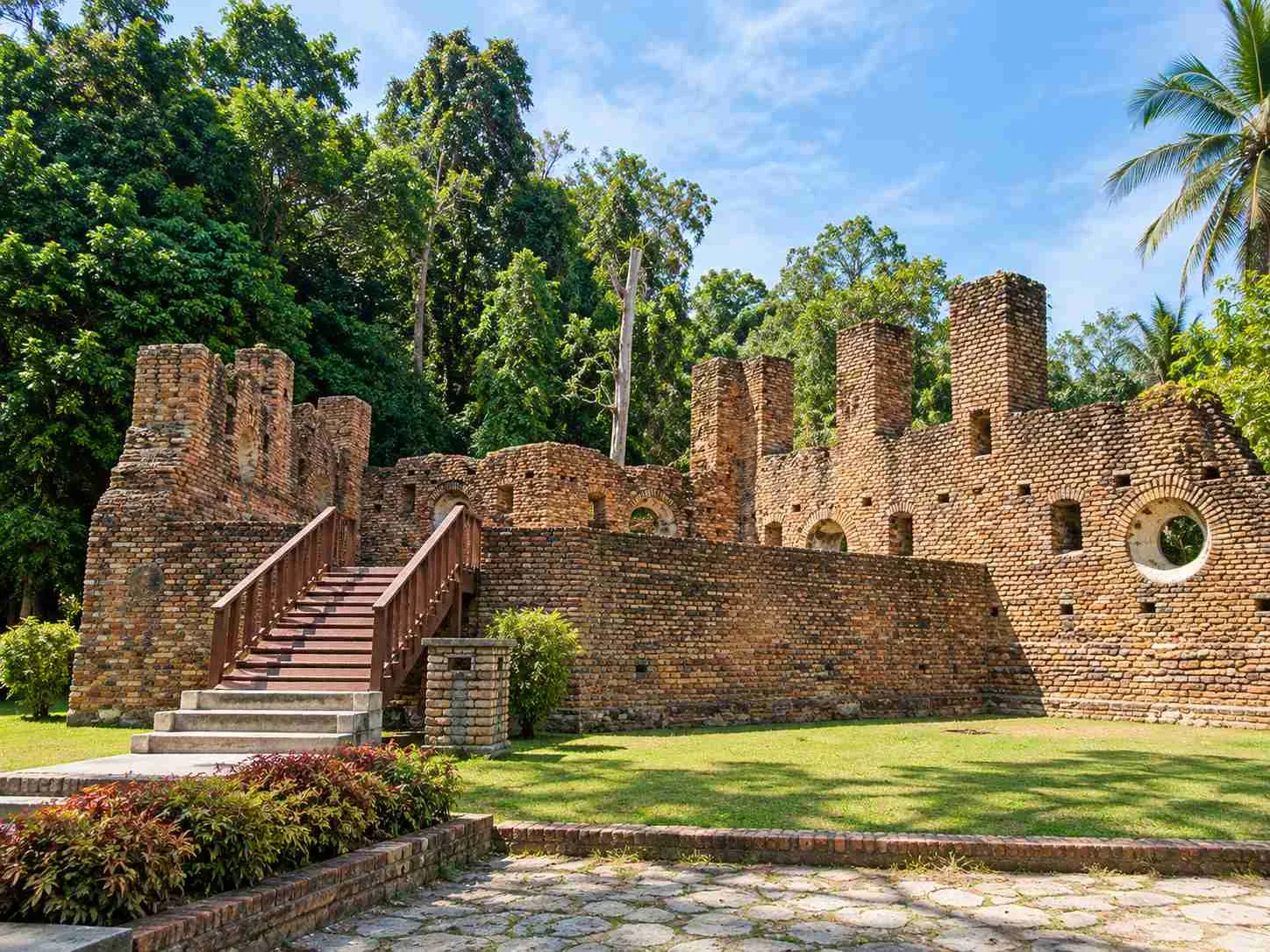
About Dutch Fort / Kota Belanda
Heritage
Dutch Fort, locally known as Kota Belanda, is one of the most important historical attractions on Pangkor Island. Located in Teluk Gedung, Pulau Pangkor, the site dates back to the 17th century and reflects a period when the Dutch were heavily involved in Perak's valuable tin trade.
Although only part of the original structure survives today, Kota Belanda remains an important reminder of Pangkor Island's trading and colonial history. The restored brick walls, historical setting and nearby Batu Bersurat make this area particularly interesting for travellers who want to discover a side of Pangkor beyond beaches, seafood and island activities.
For visitors interested in history, heritage and local culture, Dutch Fort is an easy addition to a wider journey through the places to visit in Pangkor Island.
What Is Dutch Fort / Kota Belanda?
Dutch Fort was originally established by the Dutch in 1670 at Kampung Teluk Gedung. Rather than beginning purely as a military fortress, the site served an important commercial purpose as a warehouse for storing tin obtained from Perak.
During the 17th century, tin was one of Perak's most important trading resources. The Dutch East India Company was seeking greater control over the regional tin trade, and Pangkor's location made the island strategically useful for storing and protecting supplies.
The structure developed over time. Historical records indicate that the original warehouse was built using timber before its defensive walls were later strengthened with brick.
The remains visitors see today therefore represent an important chapter in the relationship between Pangkor Island, the Perak Sultanate, regional trade and European commercial expansion in the Malay Peninsula.
Why Did the Dutch Build a Fort on Pangkor Island?
The Dutch presence on Pangkor Island was closely connected to Perak's tin trade.
During this period, tin was a highly valuable commodity, and European trading companies were competing for access to supplies throughout the region. The Dutch established facilities around Pangkor to store and protect tin acquired from Perak and to strengthen their commercial position.
Teluk Gedung provided a useful coastal location for these activities. In fact, the Malay word gedung is associated with a warehouse or storage building, which is appropriate given the historical function of the Dutch site in this area.
The 1690 Attack on Kota Belanda
Dutch attempts to strengthen control over the tin trade created opposition among local Malay leaders.
According to historical records preserved by Arkib Negara Malaysia, local Malays led by Panglima Kulup attacked and destroyed the Dutch warehouse in 1690. The attack resulted in casualties among the Dutch personnel and caused the site to be abandoned temporarily.
The Dutch later returned, repaired the installation and occupied the area again.
This episode is one reason Kota Belanda is historically significant. The site represents not only European trading activity but also local resistance to attempts to control Perak's mineral trade.
Dutch Soldiers at Pangkor in the 18th Century
The Dutch continued to use the Teluk Gedung site during the 18th century.
Historical records show that between 1743 and 1748, approximately 60 Dutch personnel were stationed at the site, including European soldiers, to guard the warehouse and its surroundings.
This period also connects Dutch Fort with another important Pangkor heritage attraction nearby: Batu Bersurat Pangkor.
The inscribed stone is located only a short distance from Kota Belanda and includes markings associated with the Dutch presence on the island. Visitors interested in history should therefore consider exploring both locations during the same stop.
What Happened to Kota Belanda?
As Dutch trading operations changed, the strategic importance of the Pangkor warehouse gradually declined.
Historical records indicate that the Dutch later established another warehouse closer to the Perak River. The older Pangkor installation was eventually abandoned and, without regular maintenance, deteriorated over time.
By the 20th century, only parts of the original structure remained.
The Kota Belanda You See Today
The present-day structure is not entirely the untouched 17th-century fort.
In 1973, Malaysia's museum authorities restored the historical site using the surviving remains and the known original dimensions of the structure.
The restored building follows the approximate original footprint, but one important feature was deliberately not recreated: the roof. Historical authorities did not have enough reliable information about the original roof design, so it was left unbuilt rather than reconstructed inaccurately.
This is useful for visitors to understand when viewing Kota Belanda today. The brick walls preserve the form and footprint of the historic site, while the open upper section reflects the limits of available historical evidence.
What Can You See at Dutch Fort Pangkor?
Kota Belanda is a relatively compact heritage site, but there are several details worth observing during your visit.
- Historic brick walls: The restored walls show the basic structure and scale of the former Dutch warehouse and fortified site.
- Open interior: Because the original roof design is not known, the structure remains open above.
- Defensive features: Openings in the walls reflect the building's defensive role during the Dutch occupation.
- Teluk Gedung setting: The surrounding coastal area helps visitors understand why this location was useful for maritime trade.
- Nearby Batu Bersurat: The famous inscribed rock is located nearby and is closely associated with the period of Dutch activity on Pangkor Island.
The attraction does not require a large amount of time to explore, but visitors who understand its history will generally find the site much more meaningful than those who see it simply as a set of old walls.
Batu Bersurat Near Dutch Fort
One of the advantages of visiting Kota Belanda is its proximity to Batu Bersurat Pangkor, also known as the Pangkor Inscribed Stone.
The historic stone is located approximately 100 metres from Dutch Fort and contains carvings associated with the Dutch presence on Pangkor during the 18th century.
Among the visible markings are Dutch East India Company-related inscriptions and an unusual carving traditionally interpreted as an animal together with a human figure.
Several stories have developed around the carving over the years. Because interpretations of the incident represented on the stone vary, visitors should treat some of the more dramatic versions as historical tradition rather than established fact.
For travellers exploring Pangkor's heritage, visiting Dutch Fort and Batu Bersurat together provides more historical context than seeing either attraction alone.
Where Is Dutch Fort Pangkor?
Dutch Fort is located in Teluk Gedung on the southeastern side of Pangkor Island, Perak.
The attraction is accessible by road and can easily be included in a sightseeing route around the island.
Visitors without their own transport can use a Pangkor taxi to travel to Teluk Gedung. Travellers who want to visit several attractions in one journey can also include Kota Belanda in a Pangkor Island sightseeing tour.
Is Dutch Fort Worth Visiting?
Dutch Fort is particularly worthwhile for travellers who enjoy history, architecture and cultural attractions.
It is very different from Pangkor's beaches and marine activities, making it a useful stop for visitors who want a more complete understanding of the island.
Kota Belanda may especially appeal to visitors interested in:
- Pangkor Island history
- Perak's historical tin trade
- Dutch history in Malaysia
- Colonial-era heritage sites
- Historical architecture
- Photography
- Local cultural attractions
- Malaysian heritage
Because the site is relatively compact, it works particularly well as one stop within a wider island sightseeing route.
Combine Kota Belanda with Other Pangkor Attractions
Visitors do not need to make Dutch Fort their only destination in this part of Pangkor Island.
A cultural sightseeing route can combine Kota Belanda with nearby Batu Bersurat and other religious, historical and local attractions around the island.
You can explore more ideas in our complete guide to places to visit in Pangkor.
If you prefer to visit several locations with arranged transportation, see the available Pangkor Island tour options. For individual point-to-point journeys, a Pangkor taxi is another convenient option.
Tips for Visiting Dutch Fort
- Allow time to visit both Kota Belanda and nearby Batu Bersurat.
- Wear comfortable footwear, particularly if you plan to explore several attractions during the same trip.
- Bring water and sun protection during warm weather.
- Do not climb, scratch or damage the historical structure.
- Respect barriers, signs and conservation instructions around the site.
- Take time to read available historical information rather than treating the site only as a photography stop.
Visitor facilities and access arrangements can change, so travellers should follow current information displayed at the attraction.
Planning Your Pangkor Island Trip
Dutch Fort is only one part of Pangkor Island's wider story. The island also offers beaches, fishing communities, temples, mosques, local food, water activities and other heritage attractions.
If you are travelling to Pangkor for the first time, our Pangkor ferry and travel information explains how to reach the island, while the Pangkor travel guide provides useful information about transportation, accommodation, attractions and things to do.
Frequently Asked Questions About Dutch Fort Pangkor
What is Dutch Fort in Pangkor?
Dutch Fort, also known as Kota Belanda, is a historic Dutch site in Teluk Gedung on Pangkor Island. It was originally established in 1670 as a warehouse connected to the Dutch involvement in Perak's tin trade.
Why is Dutch Fort called Kota Belanda?
"Kota Belanda" is the Malay name commonly used for the Dutch Fort. The name reflects the site's historical association with the Dutch presence on Pangkor Island.
When was Kota Belanda built?
The Dutch established the warehouse at Teluk Gedung in 1670. The structure was later strengthened and occupied during several different periods of Dutch activity on the island.
What was Dutch Fort used for?
The site was mainly associated with storing and protecting tin obtained through Dutch trading activities in Perak. It also served a defensive function as Dutch interests in the area expanded.
Was Dutch Fort destroyed?
Yes. Historical records state that local Malays led by Panglima Kulup attacked and destroyed the Dutch installation in 1690. The Dutch later returned and repaired the site.
Is the Dutch Fort today completely original?
No. Parts of the historic structure deteriorated after the site was abandoned. Malaysia's museum authorities restored the site in 1973 using surviving evidence and the known original dimensions. The roof was not reconstructed because its original design was not known.
Where is Dutch Fort located?
Dutch Fort is located in Teluk Gedung, on the southeastern side of Pangkor Island, Perak, Malaysia.
What else can I visit near Kota Belanda?
Batu Bersurat Pangkor is located close to Dutch Fort and is strongly associated with the same period of Dutch history. The two attractions are convenient to visit together.
How do I get to Dutch Fort Pangkor?
Visitors can reach Teluk Gedung by road using local transportation on Pangkor Island. A taxi can be used for a direct journey, or Kota Belanda can be included as part of a wider island sightseeing tour.
Discover Pangkor Island's Heritage
Dutch Fort is a reminder that Pangkor Island's story extends far beyond its beaches. Kota Belanda connects the island with Perak's historic tin trade, regional maritime commerce, European expansion and local resistance during the 17th and 18th centuries.
Visiting the restored ruins together with nearby Batu Bersurat gives travellers a valuable introduction to this part of Pangkor's history.
Continue exploring our guide to Pangkor Island attractions and places to visit to discover more historical sites, cultural landmarks, beaches and local communities around the island.
Location
Area: Teluk Gedung
Dutch Fort / Kota Belanda, Teluk Gedung, 32300 Pulau Pangkor, Perak, Malaysia
Open in Google MapsMore places to visit in Pangkor
Combine Dutch Fort / Kota Belanda with other beaches, heritage sites and local spots around the island.
Need help planning your Pangkor trip?
Tell us where you are staying, your travel date, number of guests and what you need. We will help you with the most relevant Pangkor taxi, island tour, transfer or local service enquiry.