Travel PlanningBy Pangkor Travel · Published 8 October 2026 · 5 min read
The best time to visit Pangkor Island depends on what you want from the trip. Travellers focused on beaches and outdoor activities often prefer relatively drier periods, while visitors who prioritise sightseeing, food and a quieter island atmosphere can still enjoy Pangkor during wetter months. Pangkor has a tropical climate, so sunshine, rain and thunderstorms are possible throughout the year.
When Is the Best Time to Visit Pangkor Island?
For many beach-focused visitors, the period from around December to March is a practical first choice because current travel guidance often associates these months with more favourable beach conditions on Malaysia's west coast.
However, there is no month that guarantees dry weather or calm seas. Pangkor sits off the west coast of Perak, and its rainfall pattern is different from the stronger Northeast Monsoon conditions experienced on Malaysia's east coast.
The better approach is to choose your travel period based on your priorities, then check the latest Pangkor weather forecast and sea conditions shortly before travelling.
Pangkor Weather Through the Year
| Period | Typical Planning Consideration | Suitable For |
|---|---|---|
| December to March | Often chosen for relatively favourable beach weather, but rain is still possible | Beach holidays, sightseeing and outdoor plans |
| April to May | Changing weather and thunderstorms can become more noticeable | Flexible trips with indoor or sightseeing alternatives |
| June to August | Can still offer good travel days, with weather varying from week to week | General sightseeing, beach visits and family trips |
| September to November | Rainfall and thunderstorms can become more frequent, especially around the wetter October-November period | Flexible travellers who do not depend entirely on water activities |
This table is a general planning guide, not a forecast. Day-to-day weather can differ significantly from seasonal expectations.
Does Pangkor Have a Monsoon Season?
Yes, Pangkor is affected by Malaysia's monsoon and seasonal rainfall patterns, but visitors should not treat it exactly like an east-coast island.
The Northeast Monsoon brings the heaviest seasonal rain to exposed parts of Malaysia's east coast, while Pangkor lies on the western side of Peninsular Malaysia. Rain can still be heavy on Pangkor, especially during wetter transition periods, but the island does not follow the same simple east-coast monsoon pattern.
This is why searching for a single "Pangkor monsoon season" can be misleading. It is better to look at current Pangkor weather, rainfall forecasts and sea conditions for your actual travel dates.
Best Time for Beaches and Sunset
If your priority is relaxing on the coast, choose a period when the short-term forecast shows more stable weather and leave some flexibility in your itinerary.
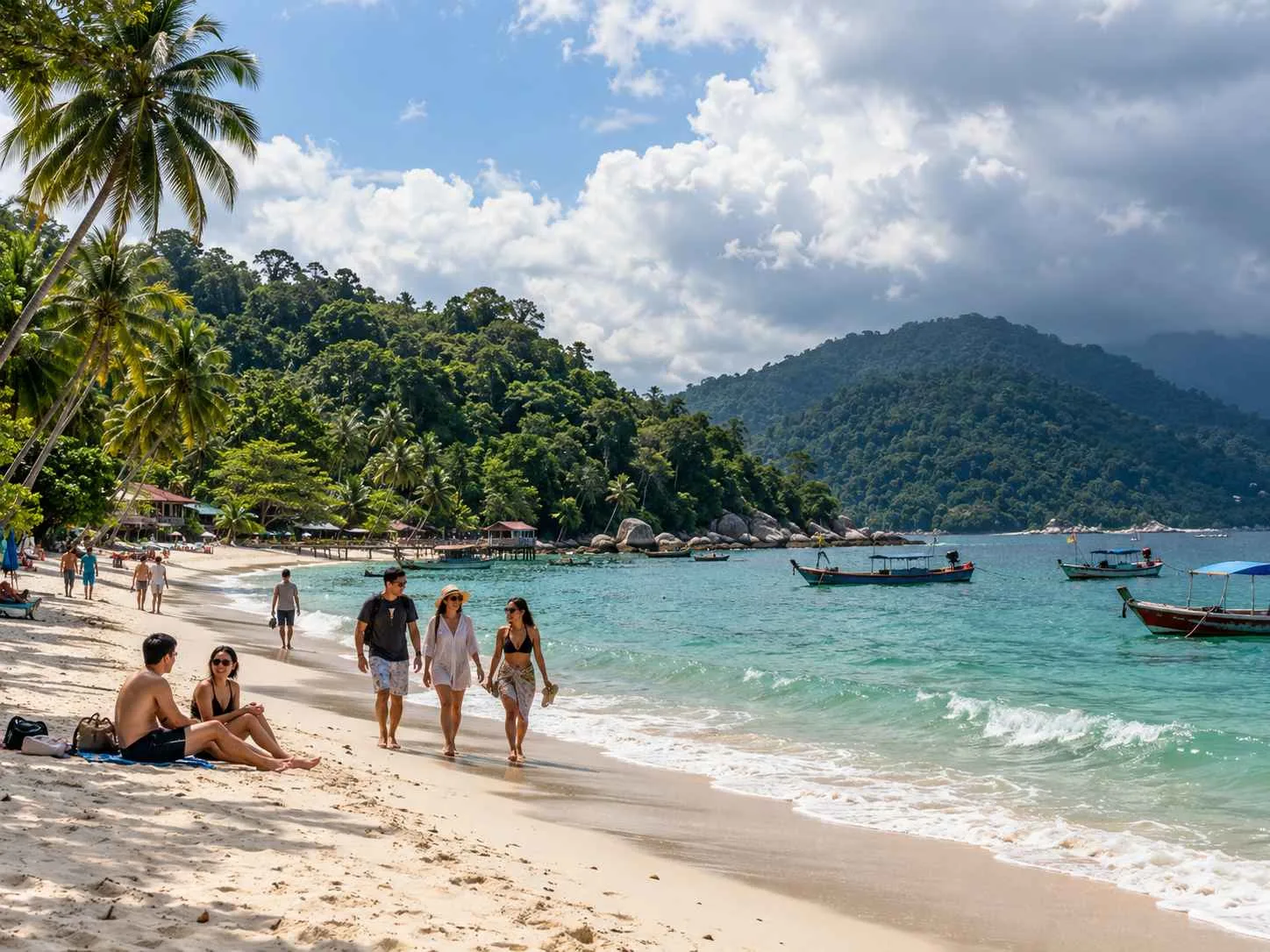
Pangkor's western coastline includes Pasir Bogak, Teluk Nipah, Coral Beach and Teluk Ketapang. These areas are also among the island's most attractive evening locations. See our Pangkor beach and sunset spots guide when planning your coastal stops.
Sunset views depend on cloud, rain and haze, so even a generally favourable month cannot guarantee a clear evening.
Best Time for Snorkelling, Island Hopping and Boat Activities
For water activities, the weather forecast is only part of the decision. Wind, waves, visibility and local sea conditions also matter.
Snorkelling, island hopping and boat trips may be available at different times of the year, but operations can change according to weather, sea conditions and local operator schedules.
Before booking, check the latest conditions and confirm equipment, life jackets, meeting point and age requirements. See the Pangkor sea and beach activities guide for current planning advice.
When Is Pangkor Less Crowded?
Pangkor can become busier during weekends, Malaysian school holidays, public holidays and major festive periods. Popular areas such as Teluk Nipah may feel noticeably livelier during these times.
If you prefer a quieter experience, consider travelling on weekdays outside major holiday periods. This can make beaches, accommodation areas, ferry connections and sightseeing stops feel less rushed.
Travellers planning a weekend or holiday-period visit should consider confirming accommodation and transport earlier than they would for a normal weekday trip.
What If You Visit During Rainy Weather?
A rainy forecast does not necessarily mean the whole Pangkor trip will be lost. Tropical rain can be localised or occur in shorter periods, and conditions may change during the day.
Keep the itinerary flexible by combining beach plans with cultural and heritage attractions. Browse the places to visit in Pangkor Island for temples, mosques, Dutch Fort, Batu Bersurat, fishing communities and other alternatives to a full beach day.
If heavy rain, thunderstorms or rough sea conditions develop, postpone swimming, boating and other exposed outdoor activities until conditions improve.
What Should You Check Before Travelling?
- Check the latest weather forecast for Pangkor Island a few days before departure.
- Check again on the morning of any boat or sea activity.
- Confirm current ferry information rather than relying on an old timetable.
- Allow extra travel time during weekends and holiday periods.
- Keep at least one flexible sightseeing option in case beach weather changes.
- Confirm activity availability directly before travelling to the meeting point.
For ferry and mainland planning, see the Pangkor ferry and travel information guide.
Choosing When to Stay in Pangkor
Your preferred area can also influence the trip. Teluk Nipah suits visitors who want a lively beach area with food and activities nearby, while Pasir Bogak offers another established beach setting with accommodation and dining options.
Review the Pangkor accommodation guide when deciding where to stay, especially if travelling during weekends, school holidays or festive periods.
Frequently Asked Questions
What is the best month to visit Pangkor Island?
There is no single guaranteed best month. January and February can be attractive for travellers looking for relatively drier conditions, while many visitors also choose the broader December-to-March period for beach-focused trips. Always check the actual forecast before travelling.
When is the rainy season in Pangkor?
Rain is possible throughout the year, but October and November can be among the wetter periods in parts of western Peninsular Malaysia. April and May can also bring more unsettled weather. Actual conditions vary each year.
Can I visit Pangkor Island during the monsoon?
Yes. Pangkor is on Malaysia's west coast and does not follow exactly the same seasonal pattern as the east-coast islands. However, heavy rain or rough sea conditions can still affect beaches, boat trips and other outdoor activities.
What is the best time for snorkelling in Pangkor?
The most suitable time depends on current sea conditions, visibility, weather and operator availability rather than the calendar alone. Check conditions shortly before your trip and reconfirm with the activity operator.
When is Pangkor Island most crowded?
Weekends, Malaysian school holidays, public holidays and major festive periods can bring more domestic visitors. Weekdays outside these periods are usually a better choice if you prefer a quieter atmosphere.
Does rain usually last all day in Pangkor?
Not necessarily. Tropical rain can occur in shorter showers or thunderstorms, but longer wet periods are also possible. Plan flexible activities rather than assuming either a completely dry or completely rainy day.
Plan Your Pangkor Trip Around the Conditions
The best time to visit Pangkor Island is ultimately the period that matches your priorities. Beach travellers may prefer relatively drier conditions, while flexible visitors can enjoy sightseeing, food and local culture throughout the year.
Before travelling, check current weather, ferry arrangements and activity conditions. If you need help planning transport, sightseeing or local services, contact Pangkor Travel with your travel dates and trip details.